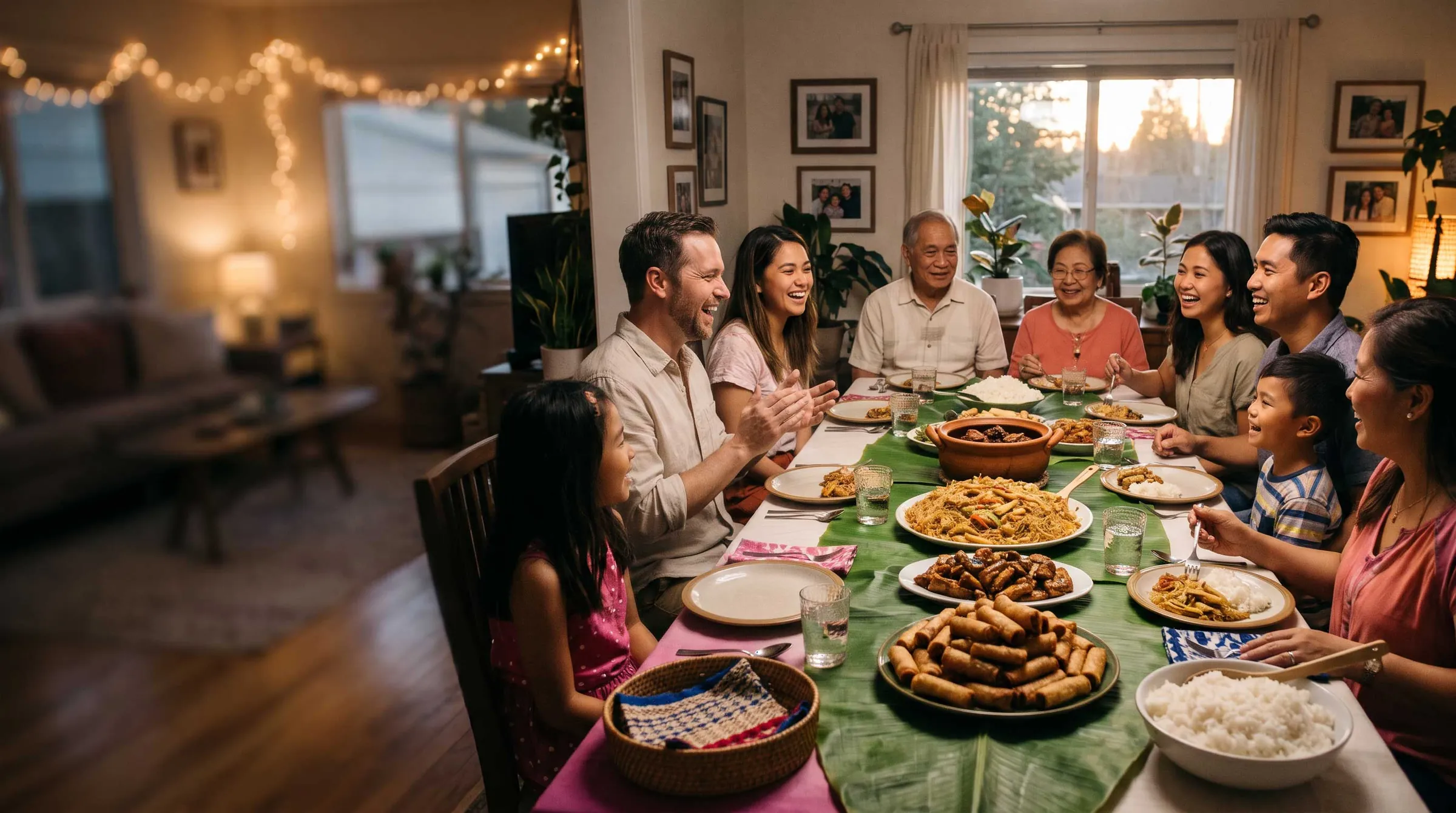
Walk into a Filipino party and you may meet six Titas, four Titos and a Kuya you have never seen before. Nobody is confused. In many Filipino families, kinship words are less a family tree and more a map of respect and closeness. Here is your guide to who is who.
Grandparents: Lola and Lolo
Both come from the Spanish abuela and abuelo. Lola and Lolo are often the center of gravity in a household, the keepers of recipes, stories and the final word on whether you are eating enough (you are not). Great-grandparents are often called Lola and Lolo too, sometimes with their first name added, like Lola Pacing.
Aunts and uncles: Tita and Tito
These come from the Spanish tía and tío. Older Tagalog words exist, tiya and tiyo, and some families still use them, along with Ali or Iyay in certain regions.
The "everyone is Tita" phenomenon
Here is the part that surprises friends who did not grow up Filipino. Your mom's best friend is Tita. The neighbor who brought pancit is Tita. The cashier at the Filipino store, if she is about your mother's age, may be Tita too. Calling an elder by their bare first name can feel disrespectful in many families, so Tita and Tito become the warm, polite default.
If you are not sure whether someone is your actual aunt, you are in excellent company. Neither are most of the cousins.
Siblings: Kuya, Ate and Bunso
- Kuya (KOO-ya): older brother. See kuya.
- Ate (AH-teh): older sister. See ate.
- Bunso (BOON-so): the youngest child.
- Panganay (pa-nga-NAI): the eldest child.
Kuya and Ate are widely traced to Hokkien Chinese, a reminder of centuries of trade and family ties. Younger siblings do not usually call an older sibling by name alone; it is Kuya Mark or Ate Joy. Like Tita, these titles stretch beyond blood. A friendly older guy at church, the jeepney driver, the delivery person: Kuya. A young woman helping at a shop: Ate.
Some families keep older Chinese-derived titles for birth order: Diko and Ditse for the second-eldest brother and sister, Sangko and Sanse for the third. If your grandparents use them, ask them to teach you; few people still do.
Being Kuya or Ate comes with real responsibility. The eldest often helps raise younger siblings, and many send money home when they work abroad.
Godparents: Ninong and Ninang
Ninongs and Ninangs are chosen at baptism, and couples choose them again as wedding sponsors. Many children have several. Around Christmas, the Pasko season, kids traditionally visit their Ninong and Ninang to mano and receive a small gift or aguinaldo. Some godparents have been known to become mysteriously hard to reach in December. We say this with love.
Ninong and Ninang also link the adults. The parents and godparents call each other Kumpare and Kumare, from the Spanish compadre and comadre, and the bond often lasts a lifetime.
Cousins and the wider circle
- Pinsan: cousin. Pinsang buo is a first cousin. In big families, cousins alone can fill a basketball court.
- Pamangkin: niece or nephew.
- Apo: grandchild.
- Anak: child, son or daughter. Also a tender way elders address any young person. See anak.
In-laws
- Biyenan: parent-in-law.
- Bayaw: brother-in-law.
- Hipag: sister-in-law.
- Balae: what the two sets of parents call each other. English has no word for this, which tells you something.
Regional titles
In Ilocano and Bisaya-speaking homes you will often hear Manong and Manang for an older man and woman, the cousins of Kuya and Ate. In the Visayas and Mindanao, Inday and Dodong are affectionate names for a girl and a boy. Our co-founder Emmanuel, who grew up in Cagayan de Oro, still answers to a few of these when he calls home.
Mano po: the blessing gesture
Mano po is how many Filipinos greet an elder. You take the elder's right hand and gently press the back of it to your forehead. The elder may reply Kaawaan ka ng Diyos (God bless you). It is common when arriving at a family gathering, leaving one, or greeting Lola after Mass.
You do not need to be perfect at it. A slightly awkward mano offered sincerely is received with joy every time.
A quick note for newcomers
Marrying into a Filipino family, or simply a close friend of one? Start with Tita and Tito for your partner's parents' generation unless they invite you to use their names, and Kuya or Ate for older siblings. When in doubt, ask kindly. Being asked is itself a sign of respect.
Why these words matter
Family terms carry values: respect for elders, care from older siblings, and the sense that the whole community helps raise a child. For Filipinos far from home, calling someone Tita can make a new city feel like family. It is bayanihan in a single word.
Your next step
At your next gathering, try greeting one elder with mano po, or ask your Lola which titles her family used growing up. Her answer might become your favorite story. Keep exploring at your own pace with our word of the day and our guide to basic Tagalog phrases.
Questions people ask
What does Tita mean in Filipino?
Tita means aunt, from the Spanish tía. Many Filipinos also use it as a respectful title for any woman of their parents' generation, such as a family friend or neighbor.
What is the difference between Kuya and Ate?
Kuya means older brother and Ate means older sister. Both are also polite titles for any older young man or woman, even strangers, like a shopkeeper or driver.
What does Bunso mean?
Bunso means the youngest child in a family. The eldest is called panganay. Bunso is often used as an affectionate nickname that sticks well into adulthood.
What is mano po?
Mano po is a gesture of respect: you take an elder's hand and press the back of it gently to your forehead. Elders often answer with a blessing.
What are Ninong and Ninang?
Ninong is a godfather and Ninang is a godmother, chosen at baptism or as wedding sponsors. Many families keep close ties with them, especially at Christmas.