Filipino food is the taste of more than 7,000 islands, centuries of trade, and a great many Lolas who refused to measure anything. If you are new to it, welcome. If you grew up on it and miss it, welcome home. Here are 25 dishes to know, grouped the way many families eat them.
First, the basics
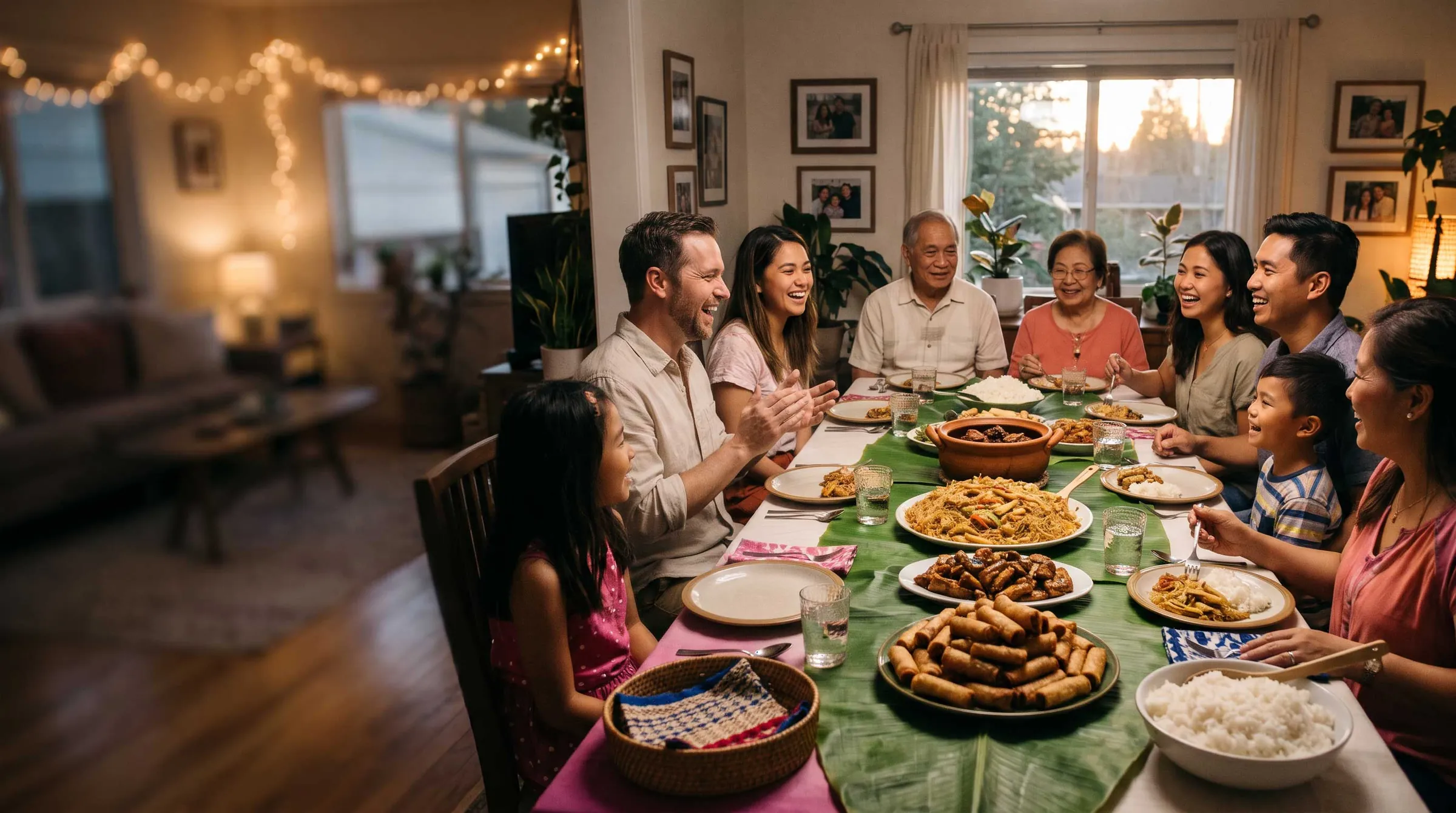
Most Filipino meals center on kanin (rice) and ulam, the dish you eat with it. Flavors balance sour, salty, sweet and savory, and the table usually holds a sawsawan, a dipping sauce of vinegar, soy sauce, calamansi or fish sauce so each person can adjust. See ulam and sawsawan.
Ulam: the main dishes
- Adobo. Meat braised in vinegar, soy sauce, garlic, bay leaf and peppercorn. Every family's version is "the correct one." Start with our chicken adobo.
- Kare-kare. Oxtail and vegetables in a peanut sauce, served with salty bagoong (shrimp paste). Try our kare-kare.
- Lechon. Whole roasted pig with crackling skin, the star of fiestas. Cebu is famous for lechon seasoned so well it needs no sauce.
- Lechon kawali. Pork belly boiled, then deep-fried until crisp. A home-kitchen cousin of lechon: lechon kawali.
- Sisig. Chopped pork, onion and chili on a sizzling plate, often with an egg. Born in Pampanga, the province many call the culinary capital.
- Bicol express. Pork in coconut milk with plenty of chili, named for the Bicol region's love of both.
- Pinakbet. Vegetables like squash, eggplant, okra and bitter melon cooked with bagoong. An Ilocano favorite.
- Chicken inasal. Grilled chicken marinated in calamansi, lemongrass and annatto, the pride of Bacolod.
- Embutido. A steamed pork roll with egg and sausage inside, a party and holiday staple: embutido.
Soups: sabaw
- Sinigang. A sour soup, usually soured with tamarind, with pork, shrimp or fish and vegetables. Many Filipinos abroad call it the taste of home: sinigang na baboy.
- Tinola. Chicken in a gentle ginger broth with green papaya or chayote and chili leaves. The soup Lola makes when you are sick.
- Bulalo. Beef shank and marrow bones simmered for hours, a specialty of Batangas, best on a rainy day.
Noodles: pancit
Noodles were brought by Chinese traders and settlers, and many families serve pancit at birthdays for long life.
- Pancit bihon. Thin rice noodles with vegetables and meat: pancit bihon.
- Pancit palabok. Rice noodles under a bright orange shrimp sauce with crushed chicharon and egg.
- Filipino spaghetti. Sweet tomato sauce with sliced hot dogs and cheese. Children love it; adults pretend they only eat it for the children: Filipino spaghetti.
Street food and merienda
Merienda is the afternoon snack, and many families take it seriously. See merienda.
- Lumpia shanghai. Thin fried spring rolls with ground pork, gone within minutes at any party: lumpia shanghai.
- Isaw and barbecue. Grilled chicken intestines and sweet pork skewers from street-side grills.
- Kwek-kwek. Quail eggs in orange batter, fried and dipped in spiced vinegar.
- Turon. Banana and jackfruit rolled in a wrapper, fried with caramelized sugar.
- Taho. Silken tofu with brown sugar syrup and sago pearls, sold by morning vendors calling "Tahooo!"
- Balut. A fertilized duck egg, boiled. Famous, a little daring, and entirely optional.
Desserts: panghimagas
- Halo-halo. "Mix-mix": shaved ice, sweet beans, fruit, jellies, leche flan and ube, topped with milk: halo-halo.
- Leche flan. A rich, silky caramel custard, heavier on yolks than many flans and traditionally steamed in an oval tin called a llanera: leche flan.
- Ube halaya. Purple yam jam, the source of the ube craze: ube halaya.
- Bibingka. Rice cake baked in banana leaves, especially loved after Simbang Gabi: bibingka.
Regional notes
There is no single Filipino cuisine; there are many regional ones.
- Luzon: Pampanga for sisig and refined fiesta cooking, Ilocos for pinakbet, bagnet and empanada, Bicol for coconut and chili.
- Visayas: Cebu for lechon, Iloilo for batchoy noodle soup, Bacolod for inasal.
- Mindanao: spice-forward dishes in Muslim Filipino communities, plus kinilaw, a fresh fish dish cured in vinegar, which is loved across the islands, including in Cagayan de Oro, where our co-founder Emmanuel grew up.
Where to start if you are new
- Comfort first: chicken adobo, pancit bihon and lumpia shanghai.
- Next level: sinigang, kare-kare with bagoong, and sisig.
- Adventurous: dinuguan (a rich pork stew made with blood), balut, and bitter melon in pinakbet.
- Something sweet: halo-halo on a hot day, or bibingka with coffee on a cold one.
Ask the cook for the story behind the dish; most will happily tell you whose recipe it was. Do not worry about getting the order "right." Many Filipino meals put everything on the table at once, so you can taste a little of each.
How to eat like family
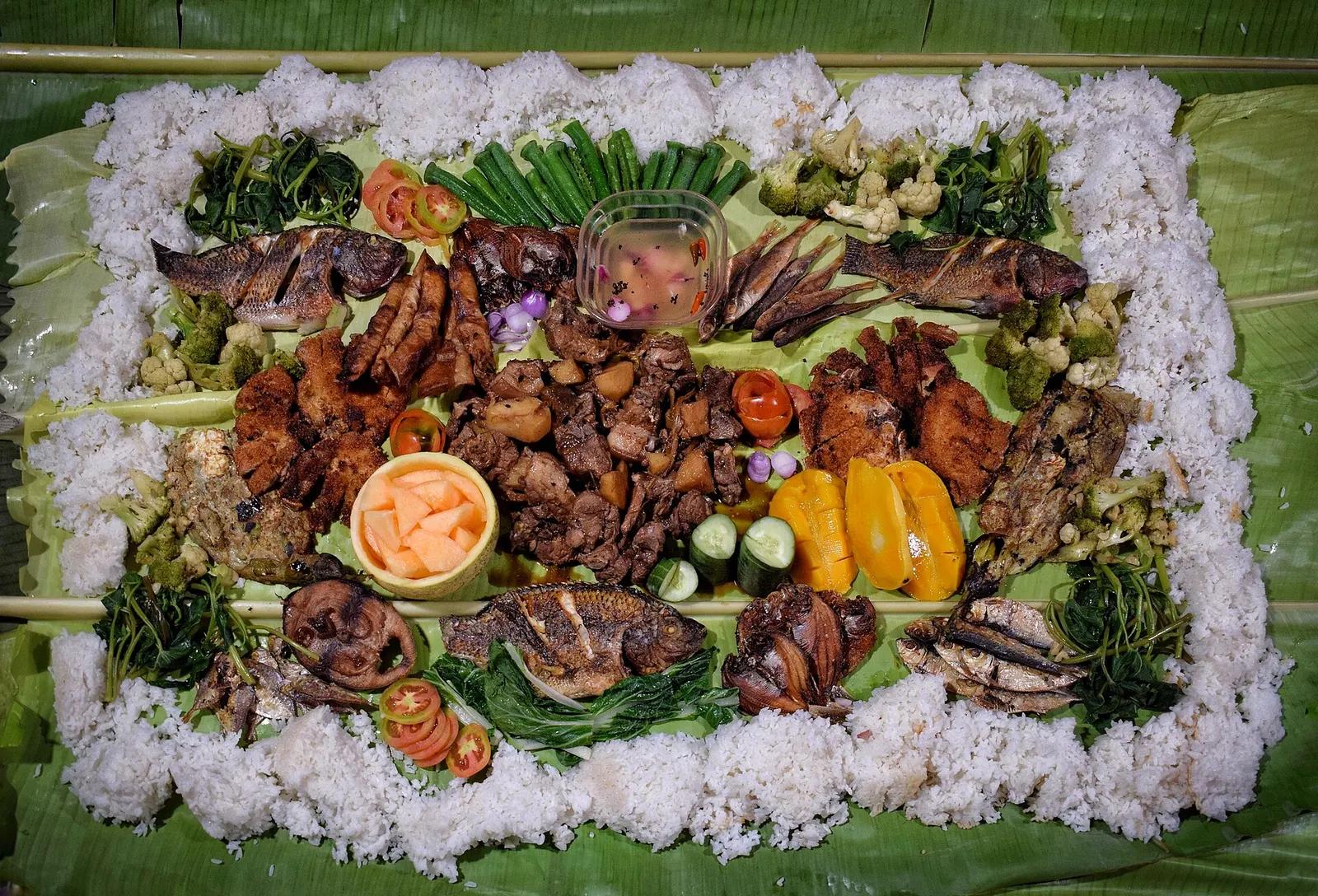
- Kamayan: eating with your hands, common at a boodle fight, where food is laid on banana leaves down a long table.
- Kain tayo! Let's eat! It is how Filipinos welcome anyone nearby. See kain tayo.
- Say masarap (delicious) at least once. The cook is listening.
Your next step
Choose one dish from this list and cook it this week, or order it at a Filipino restaurant near you from our directory. Our Kusina has step-by-step recipes when you are ready. There is no rush; Filipino food is best learned one shared meal at a time.
Questions people ask
What is the national dish of the Philippines?
The Philippines has no officially declared national dish, but adobo is widely considered the unofficial one. Lechon, sinigang and sisig are also often named as signature dishes.
What Filipino food should I try first?
Start with chicken adobo, lumpia shanghai and pancit. They are familiar, comforting and found at most Filipino restaurants. Finish with halo-halo or leche flan.
Is Filipino food spicy?
Usually not very. Most Filipino dishes are savory, sour or sweet rather than hot. Bicol express and some Mindanao dishes are the spicy exceptions, and chili is often added at the table.
What is a typical Filipino breakfast?
A classic is silog: garlic fried rice (sinangag) and a fried egg (itlog) with a meat such as tapa, longganisa or tocino. Many families also enjoy pandesal with coffee.
What is ulam?
Ulam is the dish eaten with rice, such as adobo, fish or vegetables. In many Filipino homes, a meal is rice plus one or more ulam.