What is Noche Buena?
Noche Buena means "good night" in Spanish, and in the Philippines it names the most anticipated meal of the year: the family feast on Christmas Eve. Many families eat close to midnight, after attending evening mass on December 24. In many parishes that mass is the last of the nine Simbang Gabi masses, so the feast feels like a reward for the whole season of early mornings.
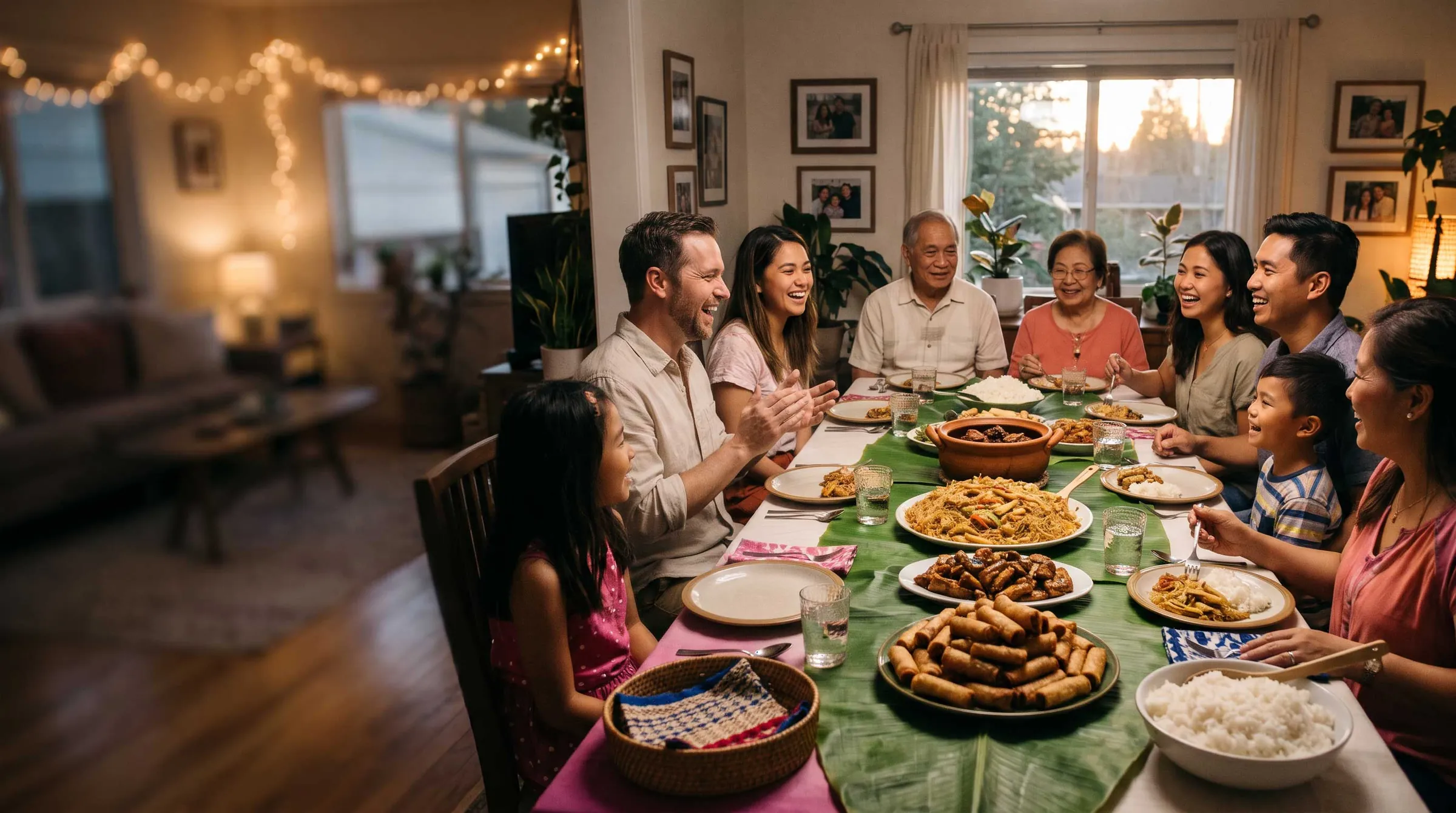
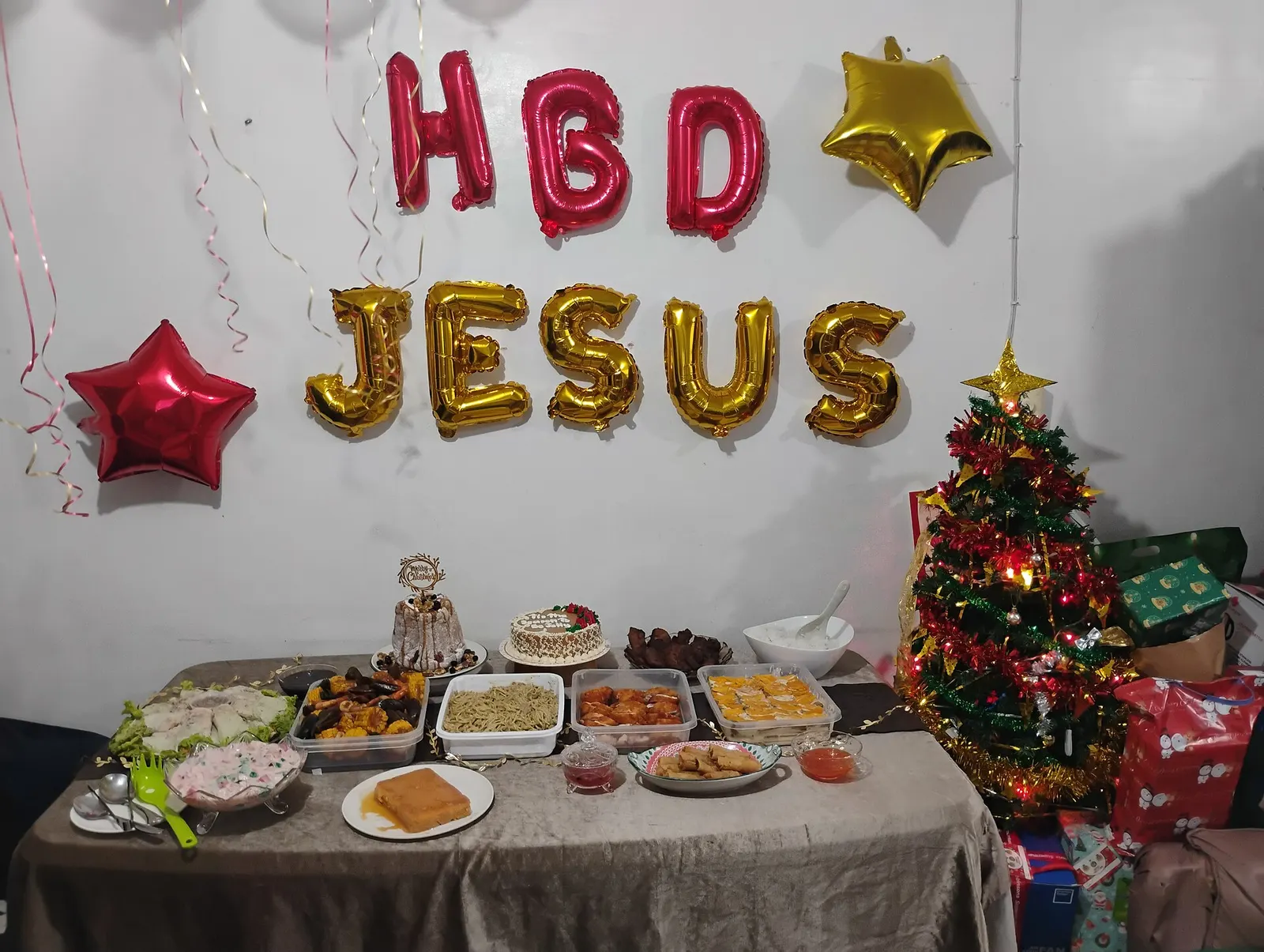
Noche Buena is less about one perfect dish and more about the table being full. Lolas bring their specialty. A tita arrives with a dessert nobody asked for and everybody eats. Cousins who have not seen each other since last year pick up exactly where they left off. Gifts are often opened right after, which explains why the children are suddenly so eager to finish eating.
Where the tradition comes from
The name and the late-night timing come from Spanish Catholic tradition, where Christmas Eve ended with the Misa de Gallo (midnight mass) and a meal at home. Filipinos made it their own. Over centuries the table absorbed Spanish, Chinese, American, and local dishes, which is why a Filipino Noche Buena can feature ham, pancit, spaghetti, and rice cakes side by side without anyone finding it strange.
Noche Buena is related to, but different from, Media Noche, the midnight feast on New Year's Eve. If you want that one too, see our guide to Filipino New Year traditions.
The classic Noche Buena dishes
Every family's table is different, and regional dishes vary across Luzon, the Visayas, and Mindanao. These are the ones many families consider essential.
The centerpieces
- Hamon. A sweet, glazed Christmas ham, often cooked with pineapple juice and brown sugar. Try our hamon recipe.
- Queso de bola. A ball of Edam cheese in red wax, sliced and eaten with ham and bread. It is one of the most iconic Pasko foods.
- Lechon or lechon kawali. Whole roast pig for the big gatherings, or crispy pan-fried pork belly for the rest of us. See lechon kawali.
- Embutido. A Filipino meatloaf, rolled and steamed, then sliced into pretty rounds. Our embutido recipe is a good place to start.
- Relleno. Stuffed chicken or deboned stuffed milkfish (rellenong bangus), a labor of love in many homes.
The crowd-pleasers
- Filipino spaghetti. Sweet sauce, hot dog slices, and plenty of cheese. Children consider this the main course. Here is our Filipino spaghetti.
- Lumpia Shanghai. Small fried spring rolls that disappear faster than you can fry them. See lumpia Shanghai.
- Pancit. Noodles for long life, a nod to Chinese Filipino tradition. Try pancit bihon.
- Chicken adobo. Not a holiday dish exactly, but rarely refused. Here is our chicken adobo.
The sweets
- Filipino fruit salad. Canned fruit cocktail, cream, condensed milk, and often nata de coco and kaong. Here is our fruit salad.
- Leche flan. Rich caramel custard, usually steamed in a llanera. See leche flan.
- Bibingka and puto bumbong. Rice cakes that many families associate with Simbang Gabi. Try our bibingka.
- Ube halaya. Sweet purple yam jam. Here is our ube halaya.
- Tsokolate or salabat. Thick hot chocolate made from tablea, or warm ginger tea, to finish the night.
A sample Noche Buena menu
Here is a balanced menu for about 10 to 12 people that a single household can manage. Mix and match to fit your family.
- To start: Lumpia Shanghai with sweet chili sauce, and sliced queso de bola
- Mains: Glazed hamon, embutido, and lechon kawali
- Noodles: Filipino spaghetti and pancit bihon (yes, both)
- Rice: Plenty of steamed white rice, or garlic rice
- Sweets: Leche flan, fruit salad, and bibingka
- To drink: Tsokolate for the adults, and juice or soda for the kids
If that feels like a lot, it is. Ask each household to bring one dish. Sharing the work is a very Filipino way to cook, and it echoes the spirit of bayanihan.
Hosting Noche Buena abroad
Many Filipino families outside the Philippines worry that their Noche Buena is "not real" without the exact ingredients from home. It is real. The heart of it is family at the table on Christmas Eve. Still, a few tips help:
- Queso de bola is Edam. Many supermarkets carry Edam cheese in red wax, especially in December. Gouda works in a pinch.
- Hamon can start with any good ham. A bone-in or spiral ham glazed with pineapple juice, brown sugar, and a little mustard gets you close.
- Find a Filipino or Asian market. They usually stock banana ketchup, pancit noodles, lumpia wrappers, nata de coco, kaong, ube halaya in jars, and tablea. Our directory can help you find Filipino businesses near you.
- Use the freezer aisle. Frozen banana leaves, grated cassava, and lumpia wrappers keep well, so buy early before the holiday rush.
- Substitute without guilt. No llanera? A small loaf pan works for leche flan. No rice flour for bibingka? Many families use a store-bought mix.
- Cook ahead. Lumpia can be rolled and frozen weeks early. Embutido and leche flan are both happy to be made a day or two before.
- Plan around mass times. If your parish does not hold a midnight mass, many families eat after an earlier evening service or simply gather at a time that works for everyone.
If your family is spread out, a video call during the meal can bring in Lola from Cebu or Tito from Dubai. Many families do this now, and it counts.
Your next step
Pick one dish you have never made, try it this week, and see whether it earns a place at your table. Then browse more recipes in Kusina, or read about the parol that will hang in the window while you eat. Learn at your pace. There is always next Christmas, too.
Questions people ask
What does Noche Buena mean?
Noche Buena is Spanish for "good night" or "holy night." In the Philippines it refers to the family feast on Christmas Eve, usually around midnight on December 24.
What time is Noche Buena?
Many families eat around midnight on December 24, after evening or midnight mass. Some families, especially abroad, gather earlier in the evening to fit work and church schedules.
What food is served at Noche Buena?
Common dishes include hamon, queso de bola, Filipino spaghetti, lumpia, pancit, embutido, lechon, fruit salad, leche flan, bibingka, and hot tsokolate. Every family's table is a little different.
What is the difference between Noche Buena and Media Noche?
Noche Buena is the Christmas Eve feast on December 24. Media Noche is the New Year's Eve feast at midnight on December 31, often with round fruits and sticky rice dishes.
What is queso de bola?
Queso de bola is Edam cheese sold as a ball coated in red wax. It is a Filipino Christmas staple, often eaten with ham and pandesal at Noche Buena.