
In many Filipino homes, New Year's Eve is part feast, part festival and part friendly negotiation with luck. The table is full, the doors are open, the kids are jumping, and somebody's Tito is banging a pot lid with real commitment. Here is what each tradition means and how you can bring a few into your own home, wherever you are.
Why so many traditions?
Filipino New Year customs blend Catholic faith, Spanish celebrations and strong Chinese influence from centuries of trade and families of Chinese descent. The shared idea is simple: how you begin the year shapes the year. So families invite abundance, sweetness and good fortune, and politely show bad luck the door.
The 12 round fruits
The most famous tradition is a bowl of 12 different round fruits on the Media Noche table. Round shapes resemble coins, so they symbolize prosperity, and 12 stands for the 12 months of the year. Some families use 13 for an extra lucky boost.
Popular choices:
- Grapes, oranges, apples and pears
- Melon, watermelon and honeydew
- Pomelo, kiwi, plums and lanzones
- Longan, chico and dalandan
Pineapple sometimes joins too, though it is not round; many families accept it for its many "eyes" and golden color. If you are shopping late on December 31, expect prices to climb. Supply and demand understands tradition perfectly.
Polka dots and round shapes
On New Year's Eve, many Filipinos wear polka dots, again because circles look like coins. Kids get dotted dresses and shirts; adults wear anything from a dotted tie to a full outfit. Some families also favor bright colors like red, yellow and gold for luck.
Jumping at midnight
When the clock strikes twelve, children (and plenty of adults) jump as high as they can. The belief is that jumping at the stroke of the new year will help you grow taller. Whether it works is unproven. Whether it is fun is not.
Noise to chase away bad luck
At midnight, many neighborhoods erupt in sound: horns called torotot, pots and pans, car horns, music and fireworks. The noise is meant to scare off bad spirits and bad luck, a custom often linked to Chinese tradition.
Firecrackers have caused many injuries over the years, and many Philippine cities now restrict private use and encourage community fireworks displays instead. A torotot and a pot lid make plenty of joy with all ten fingers intact.
Coins in pockets and rice in the jar
- Coins: many people fill their pockets with coins and jingle them at midnight, or scatter coins around the house and by the door to invite money in.
- Full containers: families make sure the rice bin, water jar and salt container are full, so the year begins with plenty.
- Bills paid: some try to settle debts before the year ends, so they do not start the new one owing.
Open doors and windows
Just before midnight, many households open their doors and windows to let good fortune enter. Lights stay on through the night for a bright year ahead. In some homes, someone steps out and back in to "bring in" the luck.
Media Noche: the midnight feast
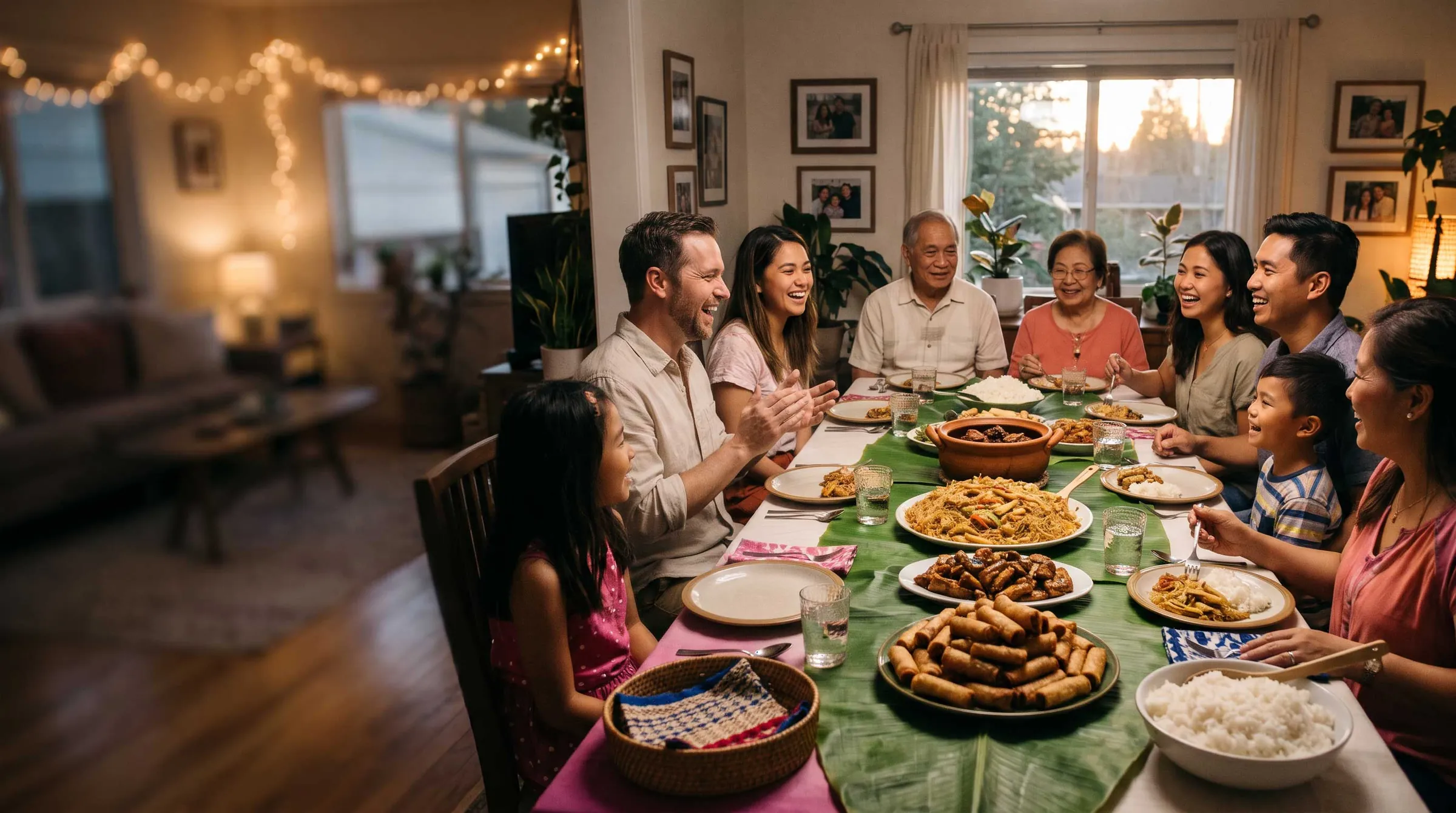
Media Noche (Spanish for "midnight") is the family feast shared right after the New Year begins, the bookend to Christmas Eve's Noche Buena. Families gather, give thanks and eat together, often staying up until dawn.
Common dishes and their meanings:
- Pancit for long life. Never cut the noodles. Try our pancit bihon.
- Sticky rice dishes like biko, kalamay and suman, so good fortune "sticks" to the family.
- Hamon and leche flan for a rich, sweet year: hamon, leche flan.
- Round foods like the fruit bowl and queso de bola, the red-waxed ball of cheese.
- Fruit salad, often made with the leftover fruits: Filipino fruit salad.
What many families avoid: chicken and fish. Chickens scratch for their food, suggesting a year of scraping by, and fish is linked to scarcity in some households. Beliefs vary by family, so follow your Lola's rules if she has them.
Celebrating far from home
For Filipinos abroad, New Year's can bring a pang of missing home. That is a real feeling, and you do not have to recreate everything to honor it. A bowl of round fruits on the counter, a polka-dot shirt, a video call at Philippine midnight (which arrives many hours before yours in the Americas) and a pan of pancit can carry the whole spirit. Many Filipino communities also host gatherings; check our events page.
Traditions on New Year's Day
The luck rituals continue after sunrise in many homes. Some families avoid sweeping or taking out the trash on January 1, so good fortune is not swept away. Others avoid spending money that day, hoping to keep it flowing in all year. Children may receive coins or small gifts from elders. And plenty of families simply sleep in, then reheat the Media Noche leftovers, which might be the most universal tradition of all. Many also attend Mass on New Year's Day to start the year with gratitude.
Your next step
This December 31, choose one tradition to try: gather 12 round fruits, wear polka dots, or invite the kids to jump at midnight. If you would like a fuller table, our Kusina has the recipes. Begin the year at your own pace, surrounded by the people you love.
Questions people ask
Why do Filipinos have 12 round fruits for New Year?
Round fruits resemble coins and symbolize prosperity, and 12 represents the months of the year, one for each month of good fortune. Some families use 13 for extra luck.
Why do Filipinos jump at midnight on New Year?
Many Filipino families believe that jumping as high as you can when the new year begins will help you grow taller. Children especially love it.
Why do Filipinos wear polka dots on New Year's Eve?
Polka dots look like coins, so wearing them is believed to attract money and prosperity in the new year. Bright colors like red and gold are popular too.
What is Media Noche?
Media Noche, Spanish for midnight, is the family feast Filipinos share just after midnight on New Year's Eve. Common dishes include pancit, sticky rice desserts, hamon, round fruits and queso de bola.
What food should you avoid on New Year in Filipino tradition?
Many families avoid chicken and fish. Chickens scratch for food, suggesting hardship, and fish is linked to scarcity in some households. Customs differ by family.