
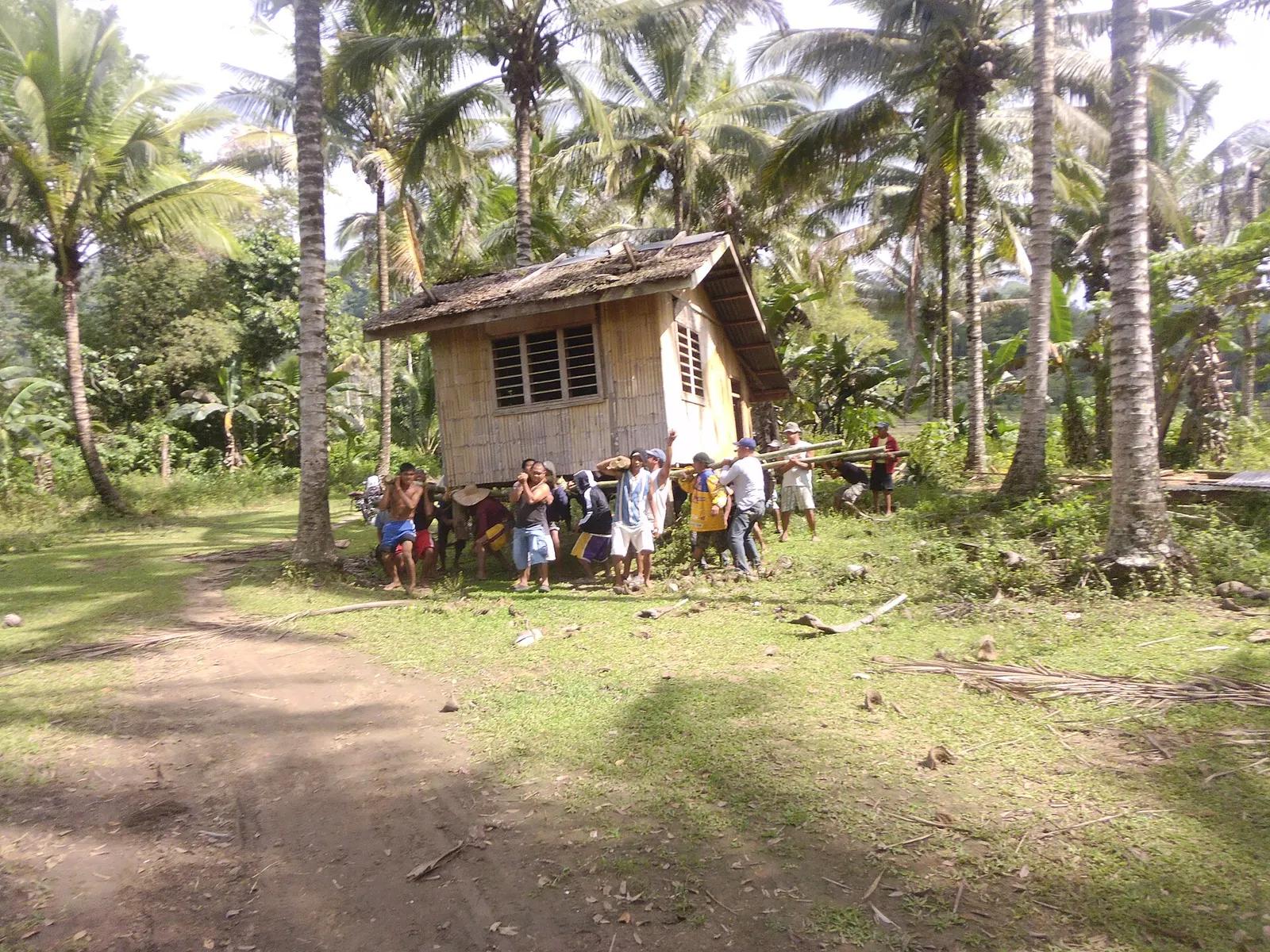
Picture a small house made of bamboo and palm leaves, sitting in a rural village. The family needs to move it, maybe to higher ground or a new plot of land. They can't afford movers. So the neighbors come. They slide long bamboo poles beneath the house, a dozen or more people take their places, and on the count, they lift the entire home onto their shoulders and walk it, together, to its new place.
Afterward, the family thanks everyone with a meal. Nobody is paid. Nobody expects to be.
That image is the classic picture of bayanihan, one of the most beloved words in the Filipino language.
What bayanihan means
Bayanihan (pronounced "buy-ah-NEE-hahn") describes a spirit of communal unity and cooperation: people coming together to help one another, especially in times of need, without expecting anything in return.
The word comes from bayan, which can mean town, community or nation. A bayani is a hero. So bayanihan carries both ideas at once: being a community and being heroic together. It suggests that heroism isn't only for the extraordinary few. It's what ordinary neighbors do when they show up for each other.
You can explore the word further in our Salita entry on bayanihan.
The house on many shoulders
The traditional house in the image is the bahay kubo, often called a nipa hut, built from bamboo, wood and nipa palm. Because these houses were light enough, communities could physically carry them from one place to another.
Today, actually carrying houses is rare, though it still happens in some places. But the image has become a national symbol. It has been painted by Filipino artists, printed in schoolbooks, and danced on stage. Even the name of the Bayanihan Philippine National Folk Dance Company borrows the word.
Why does the picture endure? Because it shows something true: some loads are too heavy for one family, and light enough for a village.
Bayanihan today
The spirit didn't stay in the past. Many Filipinos say they see it most clearly when times are hardest.
Community pantries, 2021
In April 2021, during the COVID-19 pandemic, a young woman named Ana Patricia Non set up a small bamboo cart of food on Maginhawa Street in Quezon City. Her handwritten sign read: "Magbigay ayon sa kakayahan, kumuha batay sa pangangailangan." Give according to your ability, take according to your need.
The idea spread quickly. Within days, community pantries appeared in many towns and cities across the Philippines, stocked by neighbors, farmers, vendors and strangers. It was bayanihan in its purest form: no organization required, just people trusting people.
Disaster response
The Philippines faces many typhoons, earthquakes and floods each year. After major disasters like Typhoon Haiyan (known locally as Yolanda) in 2013, Filipinos at home and abroad organized relief drives, packed goods, cooked for evacuation centers and opened their homes. Diaspora communities in cities around the world collected donations and sent help home.
It's often said that Filipinos are resilient. Bayanihan is a big part of why: resilience is easier when you're not carrying the load alone.
Bayanihan in the diaspora
You'll find bayanihan wherever Filipinos settle. It's the tita who organizes meals for a family with a new baby. The church group that drives newcomers to their first winter-coat shopping trip. The OFWs who pool money when a coworker loses a parent back home. The neighbors who show up with chairs, tables and pancit for a funeral, uninvited and essential.
Bayanihan and kapwa
Bayanihan grows from a deeper Filipino value: kapwa, the sense of a shared self, that "you" and "I" are connected. If you see others as part of yourself, helping them isn't charity. It's simply what you do. (Read more in our Salita entry on kapwa.)
That's why bayanihan feels different from formal volunteering, though both are wonderful. It's personal, immediate and reciprocal. Today you help carry my house. Tomorrow I help carry yours.
Why the world could use it
Many people today feel isolated, even in crowded cities. Neighbors don't know each other's names. Problems feel too big to touch. Bayanihan offers a simple, hopeful answer: start with the people next to you, and lift together.
You don't need to be Filipino to practice it. Many cultures have similar words for neighbors working together. But bayanihan comes with a picture so vivid that it's hard to forget: a whole house, moving on the shoulders of a community.
How to practice bayanihan this week
Bayanihan isn't a grand gesture. It's a habit. Here are a few small ways to start, at your own pace:
- Learn a neighbor's name. Then use it. Community begins with being known.
- Start or support a little pantry. A shelf at your church, school or apartment lobby. Give what you can, take what you need.
- Show up with food. A new baby, a hard diagnosis, a loss. A tray of pancit bihon says "I'm here" without a speech.
- Lend your skills. Help an elder fill out a form, fix a bike, set up a video call.
- Give to disaster relief. When a typhoon hits, support trusted relief organizations, and check on kababayan who may have family affected.
- Teach a child the word. Tell them the story of the house on many shoulders. Our Kids corner is a good place to start.
- Find your community. Browse our directory or invite friends to an event.
Lift together
The beauty of bayanihan is that it makes everyone a hero, and nobody a hero alone. The house only moves because many people lift at once.
So this week, find one thing you can help carry. Then look around: chances are, someone will be right there to help you carry yours.
Cover photo: Bonvallite / Wikimedia Commons, CC BY-SA 3.0