
Every Filipino kitchen runs on rules. They're rarely written down. Nobody explains them. You just absorb them, usually from a Lola (grandmother) who is moving faster than you and seasoning without measuring.
For years, many of us thought these habits were just quirks. Then we grew up, got our own kitchens, and realized: Lola was running a masterclass in thrift, flavor and hospitality. Here are nine habits that are secretly genius. (Not every family does all nine, and every family will argue about at least one.)
1. Measure the rice water with your finger
No measuring cup needed. Rinse the rice, level it in the pot, touch the surface with your fingertip, and add water until it reaches your first knuckle.
Why it's genius: it scales. Because you measure the water above the rice, the method roughly adjusts for small or large batches. Many cooks say it works whether you're making rice for two or twenty, though different rice varieties may need a small tweak. Rice cooker manufacturers would like a word, but Lola has been doing this since before rice cookers came to town.
2. The ice cream tub never holds ice cream
Every Filipino freezer has one: a big plastic tub labeled "Vanilla" or "Rocky Road." You open it hoping for dessert. Inside: frozen adobo. Or sinigang. Or shrimp heads saved for stock.
Why it's genius: reuse before recycling. Those sturdy tubs are free, freezer-safe and stackable. It's sustainability that predates the word. (The heartbreak, though, is real. Every Filipino child has felt it.)
3. "Kain tayo!" Always invite
Walk into many Filipino homes during a meal and you'll hear it right away: kain tayo, "let's eat." It's offered to family, neighbors, the delivery person, the new friend who came to drop something off.
Why it's genius: it turns food into connection. The invitation says you belong here, even if the guest politely declines. And between us, you should probably accept. Learn more about the phrase in our Salita entry on kain tayo.
4. Cook for one more person than you expect
Lola never cooks for exactly the number of people coming. There's always extra. A cousin might drop by. A neighbor might smell the lechon kawali. Someone will want seconds.
Why it's genius: abundance is a form of welcome. And leftovers lead directly to rule number five.
5. Nobody leaves empty-handed: pabaon
You try to leave. You are not allowed to leave. Not until Lola has packed containers of pancit, a few slices of leche flan, and possibly an entire fish for you to take home. This is pabaon, food sent with you, from baon, the word for provisions or a packed lunch.
Why it's genius: it means less waste, fewer dishes for the host and a lunch for you tomorrow. But mostly, it's love in a container. (Bring the container back. She will remember.)
6. Make your own sauce: sawsawan
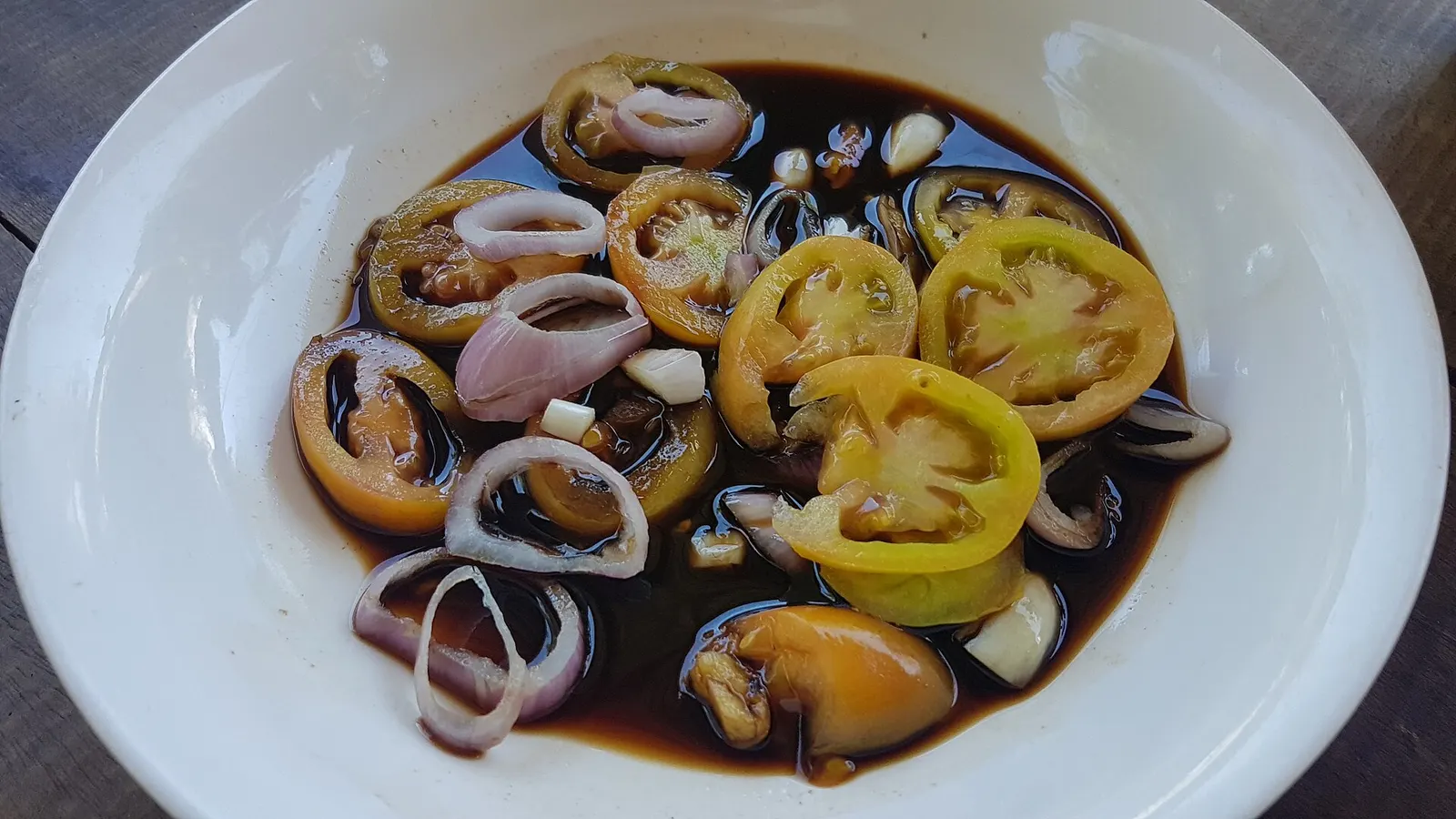
At a Filipino table, the dish is only half the story. The other half is sawsawan, the dipping sauces everyone mixes for themselves: vinegar with garlic and chili, soy sauce with calamansi, fish sauce, bagoong, sliced tomatoes and onions.
Why it's genius: everyone seasons to taste. The cook doesn't have to please every palate. Like it sour? Add more suka (vinegar). Spicy? Add sili (chili). It's a personal flavor dial, built into the meal. Try it with lechon kawali or lumpia shanghai.
7. Day-old rice is better rice
Yesterday's rice is not a problem. It's an opportunity. Fried with plenty of garlic, it becomes sinangag, the garlic fried rice at the heart of a Filipino breakfast.
Why it's genius: day-old rice is drier, so it fries up separate and slightly crisp instead of mushy. Many chefs recommend cold, leftover rice for fried rice for exactly this reason. Lola didn't need the food science. She had results.
8. Fight over the tutong
Tutong is the slightly crispy, toasted layer of rice at the bottom of the pot. In many homes, it's treasured: crunchy, nutty and gone in seconds.
Why it's genius: nothing goes to waste, and the "mistake" becomes the treat. Many cuisines have their own version, such as the socarrat of Spanish paella or the nurungji of Korean cooking. Filipinos simply know which kid gets the tutong, and why it's not you.
9. Save the rice washing water
When rinsing rice, many cooks keep the cloudy water from the second wash, called hugas bigas, to use as a soup base for dishes like sinigang or tinola. Some give the rest to the plants.
Why it's genius: the starchy water adds a little body to broth, and nothing is wasted. Try it in our sinigang na baboy. Lola's houseplants, meanwhile, are thriving.
The real rule behind all the rules
Look closely and these habits share a philosophy. Use everything. Waste nothing. Make enough to share. Make sure everyone leaves fed and cared for. Many of these habits grew from times when resources were tight, and they stayed because they work and because they're kind.
That's the deeper lesson of a Filipino kitchen. Food is never just food. It's how many families say I love you, I'm proud of you and come back soon, often without saying any of those words out loud. If you want the bigger picture, our Filipino food guide is a good next stop, and you can read more about grandmothers in our Salita entry for Lola.
Your turn
Pick one rule to try this week. Measure your rice with your knuckle. Save the tutong. Send a friend home with pabaon. Or simply say "kain tayo" the next time someone stops by during dinner.
And if you have a Lola, call her and ask about her rules. She'll have more than nine. Write them down, because one day, someone will be asking you.
Cover photo: Obsidian Soul / Wikimedia Commons, CC0