
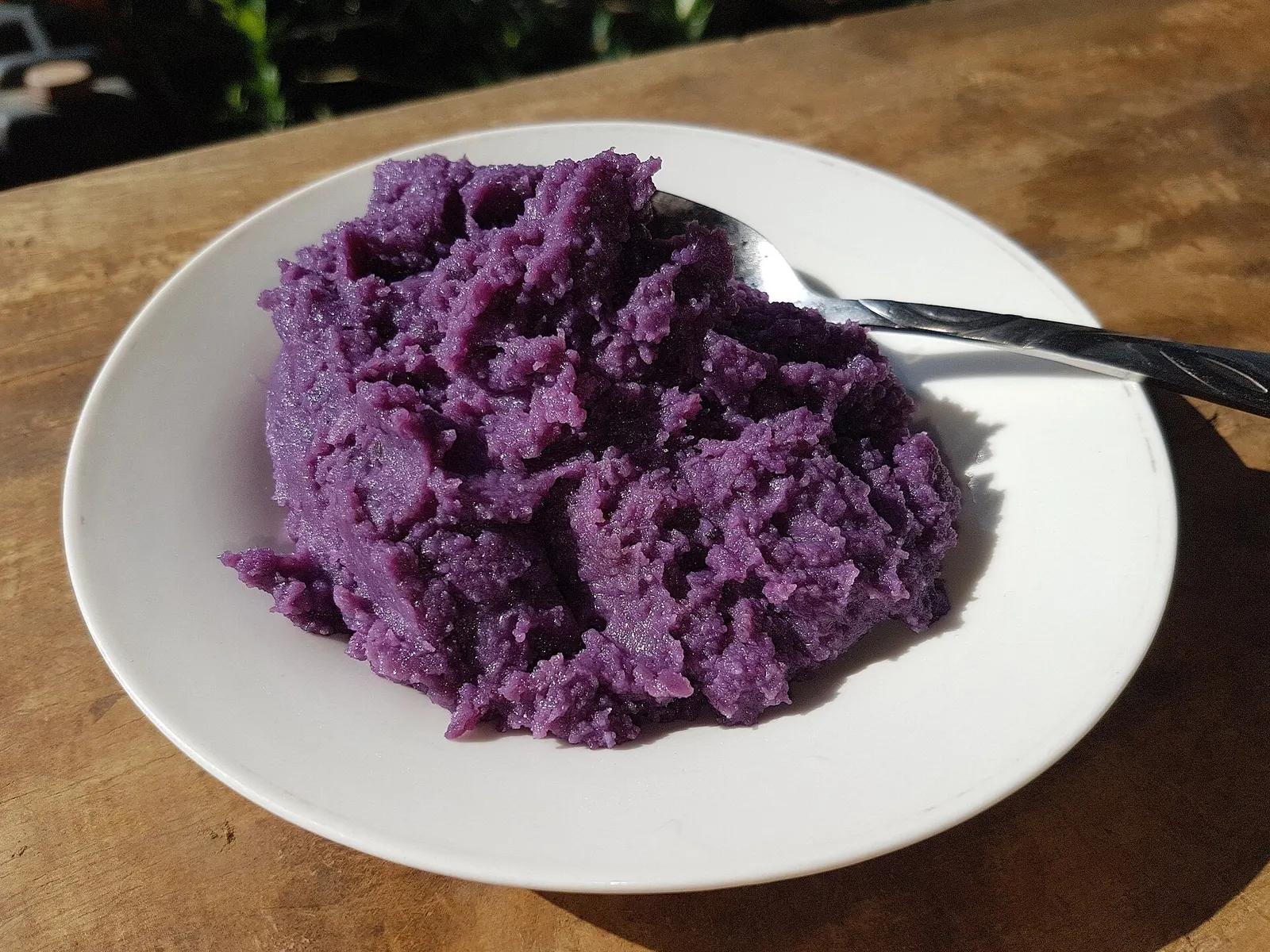
Walk into a trendy bakery in Los Angeles, London or Melbourne and there's a good chance you'll spot something violently, gloriously purple. Ube donuts. Ube croissants. Ube lattes. Ube cheesecake. To many people it looks brand new. To many Filipino families, it looks like Lola's kitchen at Christmas.
So what is ube, exactly, and how did a humble root vegetable become one of the most photographed flavors in the world?
What ube is
Ube (pronounced "OO-beh") is the Filipino word for purple yam, a tuber known to botanists as Dioscorea alata. It grows underground on a climbing vine, and its flesh ranges from lavender to a deep, almost electric violet.
The flavor is gentle: mildly sweet, a little nutty, with notes that people often compare to vanilla, pistachio or chestnut. It's not a loud flavor. Much of ube's magic is texture and color, plus the way it carries milk, coconut and butter.
In the Philippines, ube has been part of the dessert table for generations. It appears in halo-halo, the layered shaved-ice treat, in ube halaya, in ube ensaymada, in puto, and in ube ice cream, one of the most beloved flavors in many Filipino households.
Ube vs. taro: not the same thing
This is the big one. Ube and taro are often confused, especially outside Asia, but they're different plants.
- Ube (purple yam) is a true yam. Its flesh is purple all the way through, and it's naturally sweet. It's the base of Filipino ube desserts.
- Taro, called gabi in Tagalog, is a corm from a completely different plant family. Its flesh is usually white or cream with purple flecks. It's starchier and earthier, and Filipinos often use it in savory dishes like sinigang, or its leaves in laing.
Here's the twist: the pale purple "taro" bubble tea you may have ordered was likely tinted with coloring, since cooked taro is mostly off-white. And the vivid purple of ube? That's real.
One more mix-up: ube is also not the same as the purple sweet potato, such as the Okinawan sweet potato, which is related to the regular sweet potato. They look similar when cooked, but they're different plants with different textures.
Ube vs. ube extract
Fresh ube can be hard to find outside the Philippines, so many cooks and bakeries rely on substitutes:
- Frozen grated ube, sold in many Asian groceries, is often the closest to fresh.
- Ube powder is dehydrated yam, rehydrated for cooking.
- Ube halaya in jars is the ready-made jam, great for baking.
- Ube extract or flavoring is a small bottle of concentrated flavor and color. Many brands are mostly artificial flavor and dye.
Extract isn't bad. It's how many home bakers get that signature color in a chiffon cake or crinkle cookie. But it's worth knowing that some brilliantly purple "ube" treats contain little or no actual yam. If a bakery's ube tastes like purple vanilla, now you know why. (Check the label. Ube has nothing to hide.)
Ube halaya: the heart of it all
Ube halaya, also called ube jam, is the foundation of many Filipino ube desserts. The word halaya comes from the Spanish jalea, meaning jelly or jam, a small reminder of the Philippines' Spanish-era history.
To make it, cooks boil and grate ube, then stir it slowly in a pan with milk (often condensed and evaporated milk, sometimes coconut milk), butter and sugar until it becomes thick, glossy and spoonable. It takes patience and a strong arm. In many families, stirring the halaya is a job passed to whoever wandered into the kitchen at the wrong moment.
Ube halaya is eaten on its own, spread on bread, layered into halo-halo, or used as a filling. Many Filipinos have a favorite, and the ube jam from the Good Shepherd Convent in Baguio is a famous pasalubong, the gift you bring home from a trip.
Try it yourself with our ube halaya recipe, then use it in a scoop of halo-halo.
Why ube is trending
Ube's rise around the world has a few ingredients of its own:
- It's made for the camera. In the age of food photos, a naturally purple dessert stands out.
- Filipino-American bakers and chefs have proudly put ube on their menus, from family bakeries to celebrated restaurants, introducing it to new audiences.
- Supermarkets followed. Ube flavored products have appeared on shelves at mainstream grocery chains in the United States and beyond.
- It tastes like comfort. Mild, sweet and creamy, ube is easy to love on the first bite.
For many in the diaspora, seeing ube in a downtown bakery is a small, happy moment of recognition. A flavor that once meant "home" now means "home" and "cool."
Respecting the roots
As ube travels, it's worth remembering where it comes from. Ube is grown by Filipino farmers, and it's been part of Filipino kitchens long before it was trendy. A few simple ways to honor that:
- Call it ube, not just "purple flavor."
- Support Filipino bakeries and restaurants in your area. Our directory is growing.
- Learn the dishes it came from, like halaya, halo-halo and ube ensaymada.
Your ube starter kit
Ready to try it at your own pace? Here's a gentle path:
- Taste the real thing. Find frozen grated ube or a jar of ube halaya at an Asian grocery.
- Make halaya once. Our recipe walks you through it, including a job for the kids (stirring counts).
- Compare. Taste a real-ube treat and an extract-flavored one side by side. You'll never confuse them again.
- Learn the word family. Ube, gabi, halaya, pasalubong. Four words, one delicious lesson. For more, see our Filipino food guide.
The world has discovered ube. Filipino families never lost it. Now you know the whole story, and you can share it the next time someone asks, "Wait, isn't that taro?"
Cover photo: Obsidian Soul / Wikimedia Commons, CC0