
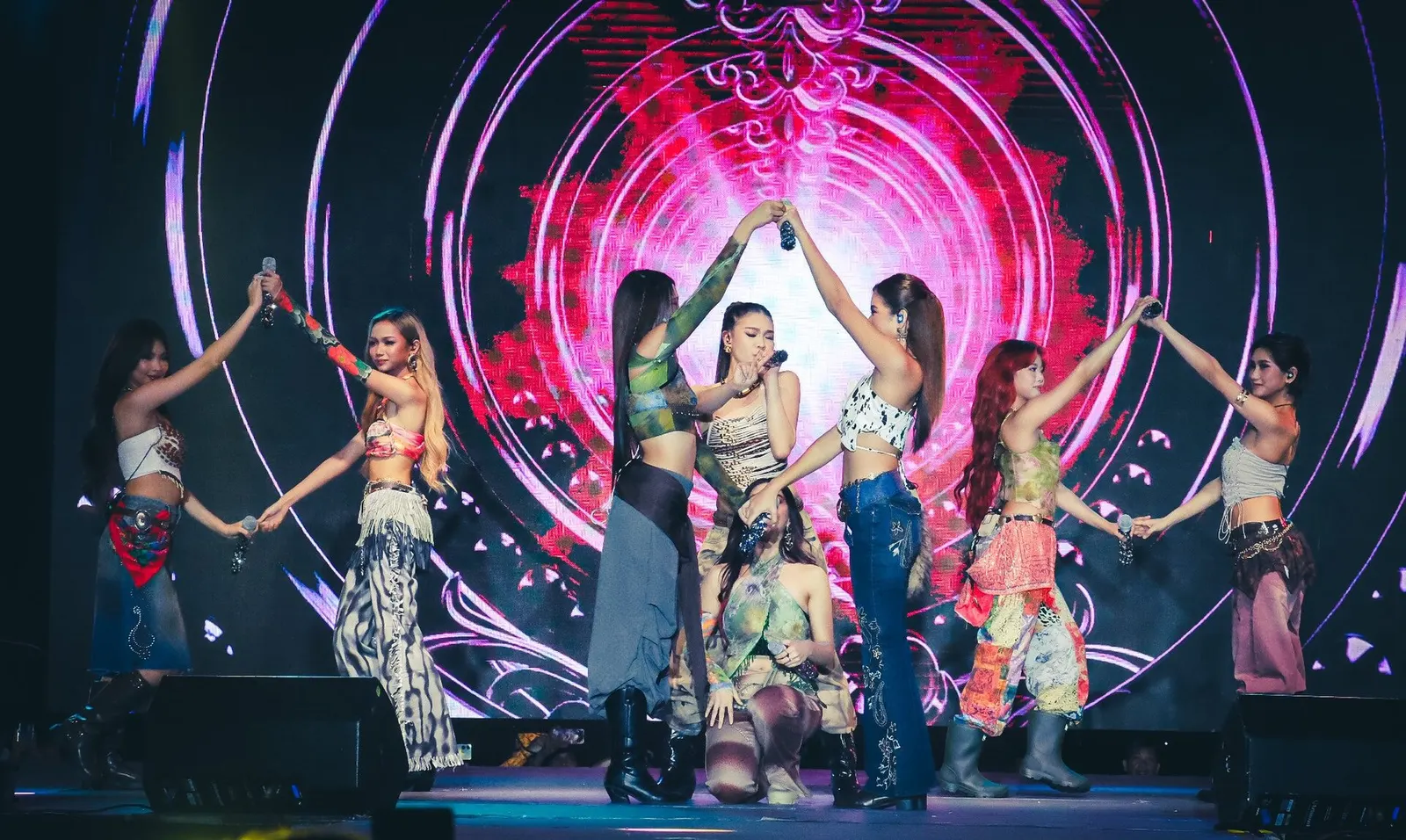
For a long time, the world's idea of Filipino music came down to one famous fact: Filipinos can sing. Karaoke, videoke, the cousin who nails every power ballad at the reunion. All true. But in the last few years, something new has happened. Filipino pop groups, singing in Filipino and English, have stepped onto the biggest festival stages on Earth, and a generation of fans has a new word for it: P-pop.
What is P-pop?
P-pop is short for Pinoy pop, a term for Filipino pop music, especially the idol-group style of singing, rapping and tightly choreographed dance. The format owes a clear debt to K-pop's training system and fan culture, and many groups say so openly. But the sound and the stories are Filipino: lyrics in Tagalog and English, references to Philippine life, and a deep pride in where the music comes from.
Pinoy itself is an informal, affectionate word Filipinos use for themselves. You'll hear it everywhere, from "Pinoy pride" to "Pinoy food."
Two groups have led the way.
SB19: the group that opened the door
SB19 is a five-member boy group: Pablo, Josh, Stell, Ken and Justin. They trained under the Philippine agency ShowBT and debuted in 2018. Their early singles didn't break through right away. Then, in 2019, a fan-shot video of the group performing "Go Up" spread online, and almost overnight a dedicated fandom, known as A'TIN, was born.
What came next was a steady climb. In 2021, SB19 was nominated for Top Social Artist at the Billboard Music Awards, widely reported as a first for a Filipino act. Songs like "Bazinga" and "GENTO" became anthems for fans, and the members took more control of their own writing and production, a big step in an industry where groups often perform what they're given.
The Chicago chapter
This year, SB19 brought P-pop to our hometown. On July 30, 2026, they played Lollapalooza in Chicago's Grant Park, reported by Philippine and international outlets as the first Filipino group to perform at the festival. According to those reports, the set included "GENTO," the first live performance of the new single "Lawless," and a surprise appearance by Benny the Bull, the Chicago Bulls mascot, who joined them on stage during "Dungka!" Fans back in the Philippines gathered at watch parties to stream it.
For Filipino families in Chicagoland, many of whom have lived here for generations, seeing a Filipino group on that stage meant something special. (Benny the Bull, for his part, seemed to have a very good time.)
BINI: the nation's girl group
BINI is an eight-member girl group: Aiah, Colet, Maloi, Gwen, Stacey, Mikha, Jhoanna and Sheena. They were formed through the ABS-CBN Star Hunt Academy and debuted in 2021. Their name comes from binibini, a Tagalog word for a young woman, with a sense of grace and respect.
BINI's breakthrough came in 2024, when the songs "Salamin, Salamin" and "Pantropiko" became inescapable in the Philippines: on the radio, in malls, in countless dance videos. Fans, known as Blooms, helped make them one of the most talked-about acts in the country, and media there began calling them the "Nation's Girl Group."
Coachella and the world
In April 2026, BINI performed at the Coachella Valley Music and Arts Festival in California, playing both weekends. Major outlets, including The Hollywood Reporter, described them as the first Filipino act to perform at Coachella. Reports from the festival described a set that opened in golden outfits with salakot, the traditional wide-brimmed Filipino hat, a kulintang-inspired dance break on the second weekend, and a finale with "Pantropiko." The Philippine Senate later honored the group for the performance.
BINI followed Coachella with their Signals EP and the Signals World Tour, which, according to ABS-CBN, opened with sold-out shows in the Philippines before an 11-stop North American leg in August. Some European dates were later reported as postponed, so if you're hoping to see them, check the group's official channels for the latest schedule.
Why this moment matters
It would be easy to see all this as just pop music. But for many Filipinos, especially in the diaspora, it lands deeper.
- Representation. Kids who grew up rarely seeing Filipinos on global stages now see groups who look like their cousins, singing in their Lola's language.
- Language pride. Fans around the world are learning Tagalog lyrics phonetically, the same way many Filipinos learned English songs.
- Culture, remixed. Salakot on a festival stage, kulintang in a dance break, Filipino words in a chorus. This is heritage worn proudly, not hidden.
- A door held open. SB19 and BINI aren't alone. Groups like ALAMAT, KAIA and others are building their own audiences, and the success of the leaders makes room for the next wave.
A word about fandom
Like any passionate fan culture, P-pop fandoms can be intense online. The best of it, though, looks a lot like bayanihan, the Filipino spirit of community effort: fans organizing streaming parties, translating lyrics, raising funds for typhoon relief and showing up for each other. That's the part worth celebrating, and copying.
How to dive in, at your pace
You don't need to become a superfan overnight. Try this:
- Listen to three songs: SB19's "GENTO," BINI's "Pantropiko," and BINI's "Salamin, Salamin." Notice which Filipino words you recognize.
- Look up one lyric. Pick a line in Tagalog and translate it. It's a fun way to grow your vocabulary, and our Tagalog phrases guide can help.
- Share it with an elder. Play a song for your Tita or Lolo and ask what music they loved at your age. You might get a story, or a surprise duet.
- Test yourself. Then see how much Filipino culture you know with Think You Know Pinoy?.
Every generation of Filipinos finds a way to carry the culture forward. For many young Filipinos today, that way has a beat, a dance break and a chorus in Tagalog. And honestly? It sounds pretty great.
Cover photo: Mayor Hisham Ismail / Wikimedia Commons, Public domain