Why Filipino American history matters
Filipino Americans are one of the largest Asian American communities in the United States, yet many grew up never seeing their story in a textbook. If that was you, you are not alone, and it is not too late. The history is long, surprising, and full of people worth knowing.
1587: the first landing at Morro Bay
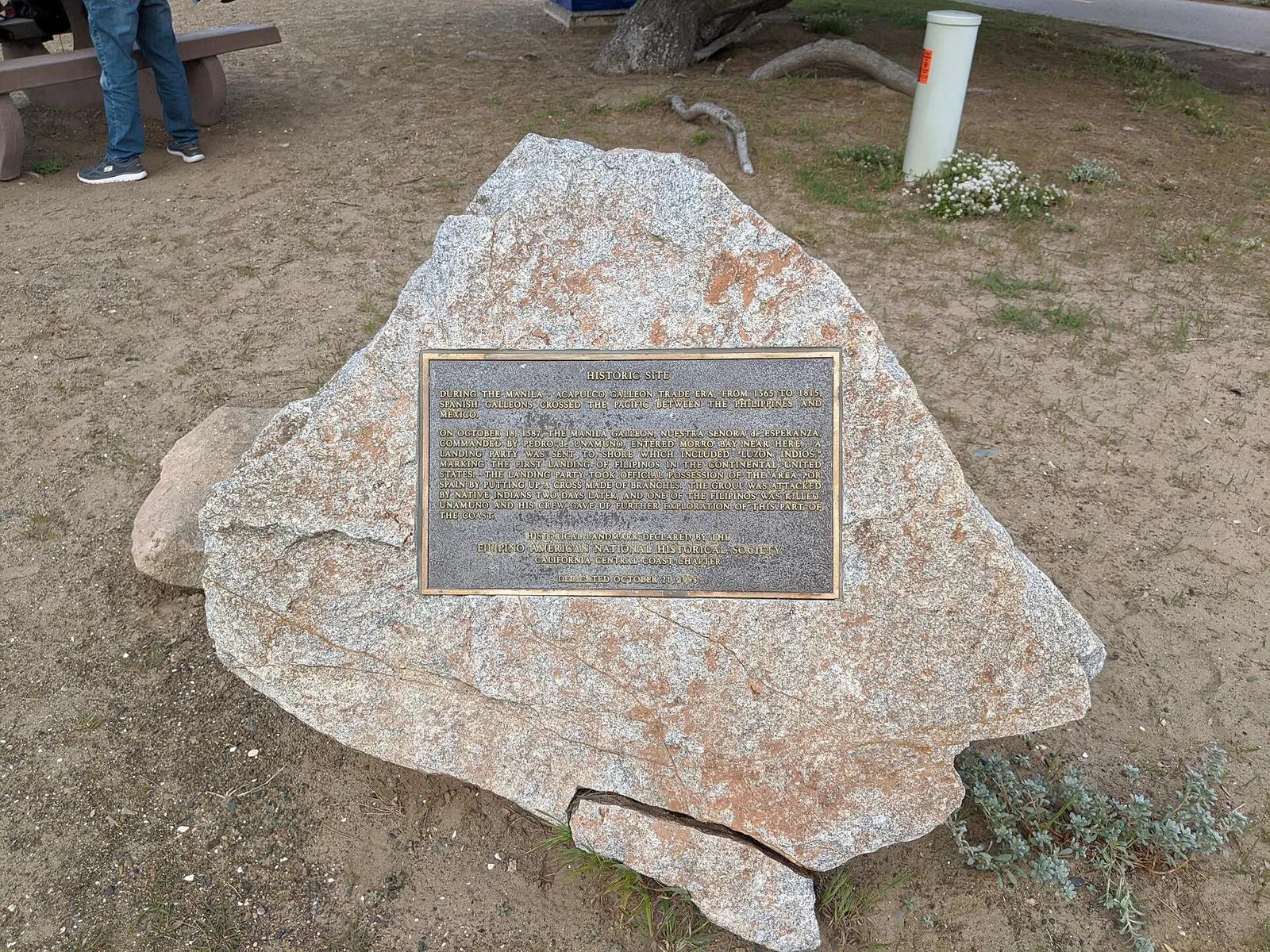
The story starts more than four centuries ago, during the Manila galleon trade that linked Manila and Acapulco from 1565 to 1815. Spanish galleons crossing the Pacific were often crewed in part by Filipino sailors, called Luzones Indios in Spanish records.
On October 18, 1587, the galleon Nuestra Señora de Esperanza anchored at what is now Morro Bay, California. A landing party that included Filipino sailors went ashore. It is the earliest recorded presence of Filipinos in what would become the continental United States. A historical marker stands there today.
Saint Malo, Louisiana
Some Filipino sailors left the galleon trade and settled along the Gulf Coast. The best-known community was Saint Malo, a fishing village of stilt houses in the marshes of St. Bernard Parish, Louisiana. Many accounts date its founding to the 1760s, though the earliest firm documentation is from the 1800s.
In 1883, writer Lafcadio Hearn described the village in Harper's Weekly, one of the first national articles about Filipinos in America. Hurricanes eventually wiped Saint Malo off the map, but descendants of these "Manilamen" are still part of Louisiana's story, and a historical marker was dedicated in 2019.
The pensionados
After the United States took control of the Philippines in 1898, the Pensionado Act of 1903 sent promising young Filipinos to study at American colleges on government scholarships. Many returned home to become leaders, teachers, and officials. Some stayed, and their path inspired thousands of later students who came to work and study on their own.
The Manongs
In the 1920s and 1930s, tens of thousands of young Filipino men, many from the Ilocos region and the Visayas, came to Hawaii and the West Coast to work. They cut sugarcane in Hawaii, picked asparagus and grapes in California, and canned salmon in Alaska. Later generations call them the Manongs, from the Ilocano word for older brother.
Their lives were hard. They faced low wages, violence, and laws that barred them from owning land and, in many states, from marrying white women. Because few Filipino women were allowed to immigrate, many Manongs never had families of their own. Their story is told powerfully in Carlos Bulosan's book America Is in the Heart.
Delano, 1965
The Manongs also organized. On September 8, 1965, Filipino farmworkers of the Agricultural Workers Organizing Committee, led by [Larry Itliong](/people/larry-itliong), Philip Vera Cruz, and others, walked out of the vineyards of Delano, California. Itliong asked Cesar Chavez and the mostly Mexican American workers of his union to join them. They did, and the two groups later merged into what became the United Farm Workers.
The Delano Grape Strike lasted five years and won landmark contracts in 1970. For decades, the Filipino role was left out of many retellings. Today, thanks to historians and families, Itliong and Vera Cruz are increasingly recognized for starting it.
World War II veterans and the fight for equity
During World War II, more than 200,000 Filipinos served under the American flag, including in the battles of Bataan and Corregidor and in guerrilla resistance. They were promised the benefits of U.S. veterans. Then the Rescission Act of 1946 took most of those benefits away.
Veterans and their families fought for decades to make it right. In 2009, Congress created the Filipino Veterans Equity Compensation Fund, offering one-time payments to surviving veterans. In 2017, Filipino and Filipino American World War II veterans received the Congressional Gold Medal, one of the nation's highest civilian honors. For many families, recognition came only after their veteran had passed, which is why some still keep the story alive at reunions and on Veterans Day.
The nurses
Beginning in the late 1940s and growing after the Immigration and Nationality Act of 1965, thousands of Filipino nurses came to the United States to fill shortages in American hospitals. Their training, rooted in American-style nursing schools in the Philippines, made them highly sought after.
Today a remarkable share of nurses in the U.S. are Filipino or Filipino American. During the COVID-19 pandemic, Filipino nurses served on the front lines and suffered a heavy loss of life. Ask a Filipino American family if they have a nurse in it, and the answer is very often "which one?"
Filipino American History Month
October is Filipino American History Month in the United States. The month was championed by the Filipino American National Historical Society (FANHS), founded by Fred and Dorothy Cordova, and the U.S. Congress formally recognized it in 2009.
Why October? Because it marks the October 18, 1587 landing at Morro Bay. Many also note that Larry Itliong was born in October.
Notable firsts
Filipino Americans have opened many doors. A few to know:
- [Vicki Manalo Draves](/people/vicki-manalo-draves) became the first woman to win Olympic gold in both springboard and platform diving, at the 1948 London Games, and the first Asian American to win Olympic gold.
- Peter Aduja of Hawaii, elected in 1954, is often cited as the first Filipino American elected to public office in the United States.
- Bobby Scott of Virginia, elected in 1992, became the first member of Congress with Filipino ancestry.
- [Lea Salonga](/people/lea-salonga) won the 1991 Tony Award for Miss Saigon, becoming the first Asian woman to win a Tony.
- [Cristeta Comerford](/people/cristeta-comerford) became the first woman and first person of Asian descent to serve as White House Executive Chef, in 2005.
And the community has always looked back to its heroes, including [Jose Rizal](/people/jose-rizal), whose writings inspired Filipinos at home and abroad.
Your next step
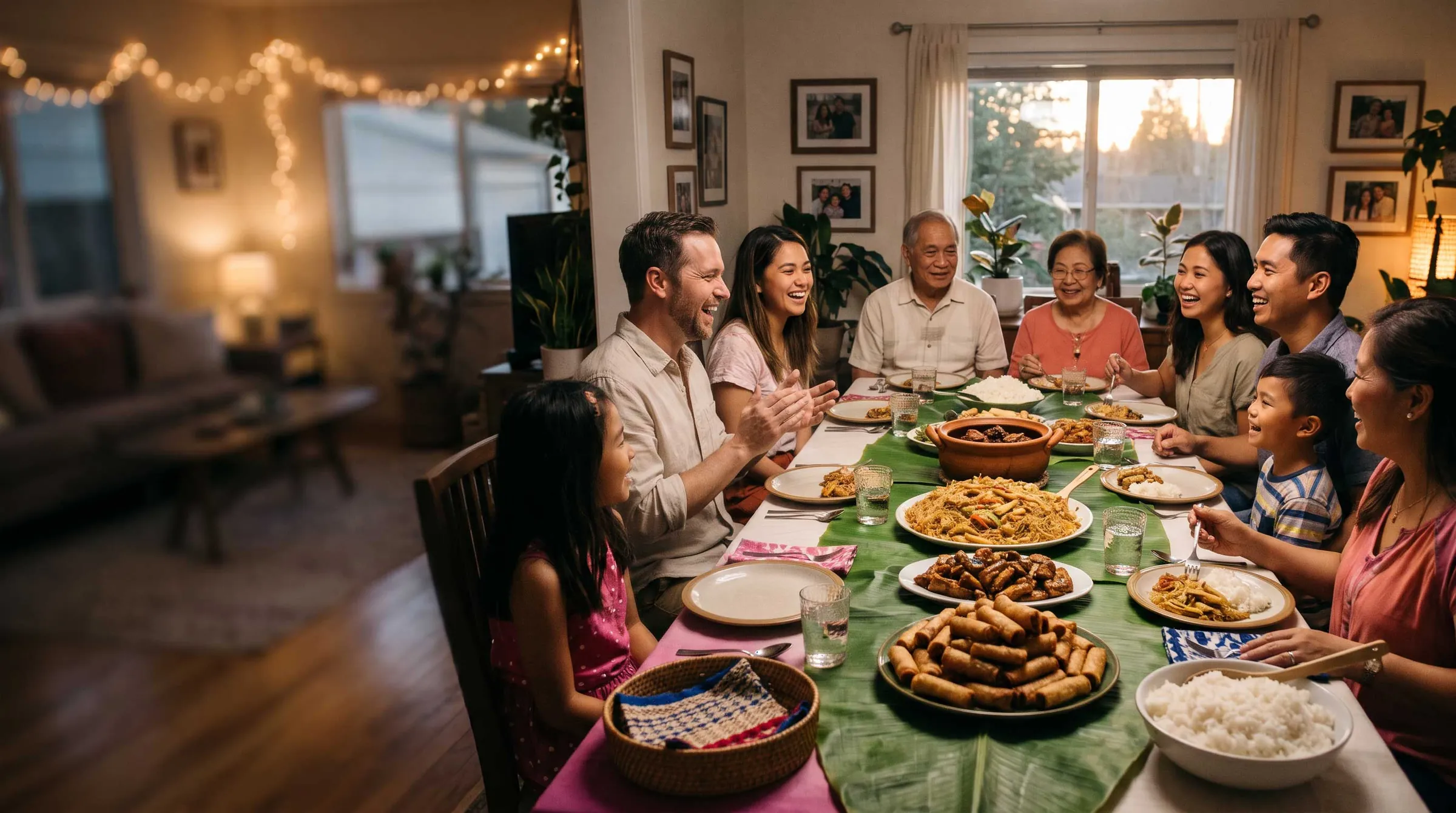
Pick one person from this guide and spend ten minutes learning more about them in our People section. If you have a Lolo or Lola nearby, ask them how your family came to America. Their story is Filipino American history, too. Then test what you learned with our trivia whenever you are ready.
Questions people ask
Why is Filipino American History Month in October?
October marks the first recorded landing of Filipinos in the continental U.S., at Morro Bay, California, on October 18, 1587. Congress formally recognized the month in 2009.
When did Filipinos first come to America?
The first recorded landing was October 18, 1587, when Filipino sailors from the Spanish galleon Nuestra Señora de Esperanza came ashore at what is now Morro Bay, California.
Who were the Manongs?
The Manongs were the generation of Filipino men who came to Hawaii and the West Coast in the 1920s and 1930s to work in fields and canneries. Manong is Ilocano for older brother.
What role did Filipinos play in the Delano grape strike?
Filipino farmworkers led by Larry Itliong began the strike on September 8, 1965, then invited Cesar Chavez's union to join. The groups later merged into the United Farm Workers.
What was the first Filipino settlement in the United States?
Saint Malo, a fishing village in St. Bernard Parish, Louisiana, settled by Filipino sailors. Many accounts date it to the 1760s, though the first firm written record is from the 1800s.