
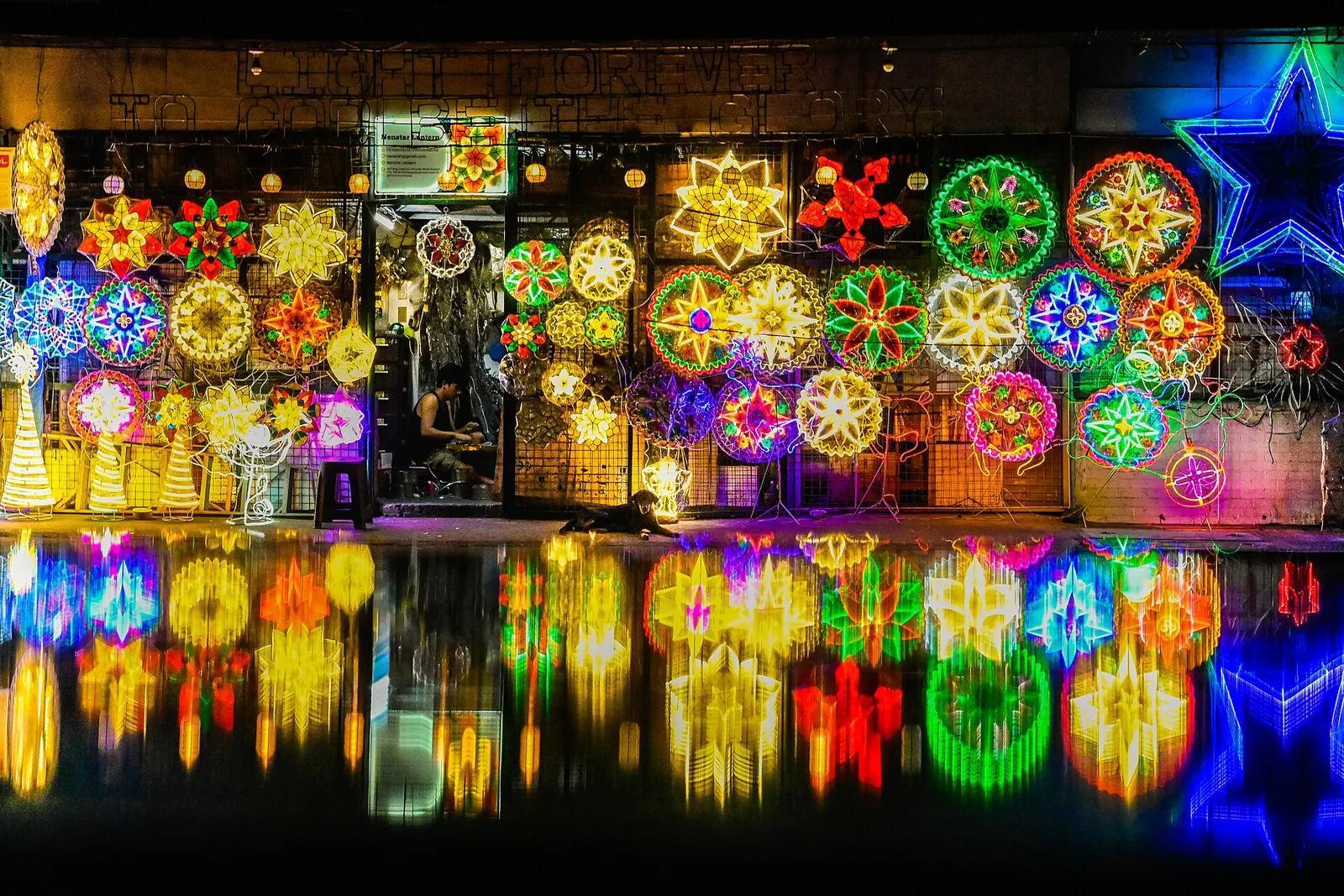
For many Filipinos, Christmas is the most important season of the year, and the one that makes distance hurt the most. Millions of Filipinos live and work outside the Philippines. Many are OFWs, overseas Filipino workers, who spend Christmas thousands of miles from the people they're working for: nurses in London, caregivers in Hong Kong, engineers in Dubai, seafarers somewhere on the ocean.
If you're spending this Pasko far from home, we want to say it first: the homesickness is real, and it's a sign of how much you love. Here's how Filipinos around the world keep the season alive, and some ideas to help you do the same.
The balikbayan box: Christmas in a carton
Long before December, many families abroad begin filling a balikbayan box, a large cardboard box shipped home to family in the Philippines. Balikbayan means a Filipino returning home, from balik (return) and bayan (homeland or town). See our Salita entry on balikbayan.
The boxes are packed with care, and with a level of spatial engineering that would impress an architect: canned goods, chocolates, lotion, shoes, clothes for every niece and nephew, and sometimes a note tucked inside. Because sea shipping can take weeks or months, many families send their boxes by early autumn so they arrive in time for Christmas.
For the families receiving them, opening the box is an event. For the person who packed it, it's a way to be present at a table they can't sit at. Learn how it works in our balikbayan box guide.
Noche Buena on video call
Noche Buena is the Christmas Eve feast, shared near midnight after Mass, with ham, queso de bola, pancit, spaghetti and more. (Our Noche Buena guide has the full spread.)
When family is spread across time zones, Noche Buena becomes a puzzle. Midnight in Manila is morning in Chicago, late afternoon in London and evening in Dubai. Many families solve it with a phone propped against a rice cooker: one screen, several kitchens, everyone eating "together."
Some families pick one shared moment, often Manila's midnight, and gather whoever can join. Others call in shifts. Some send money ahead so that the ham on the table in the province is, in a small way, a gift from the person on the screen. It isn't the same as being there. But for many families, it's a real way to share the table.
The parol in the window
The parol, the star-shaped Christmas lantern, is perhaps the most recognizable symbol of Filipino Christmas. It represents the Star of Bethlehem and, for many families, hope and light in the dark. The city of San Fernando in Pampanga is famous for its giant, elaborate lanterns.
Abroad, a parol in the window is a quiet signal. Walk through neighborhoods in Toronto, London, Dubai, Sydney or Chicago in December and you may spot one: a capiz shell star in a high-rise window, a bamboo lantern above a front door. To another Filipino passing by, it says: kababayan lives here. Make your own with our parol guide.
Simbang Gabi, wherever you are
Simbang Gabi, the nine-day series of Masses before Christmas, is celebrated by Filipino communities around the world. In many cities, parishes hold the Masses in the evening so working families can attend, followed by bibingka, puto bumbong and hot salabat (ginger tea) in the parish hall.
For many OFWs, Simbang Gabi is where they find their community abroad, the friends who become a second family. Find one near you with our Simbang Gabi finder, and read more in our Pasko guide.
The other side of the call
It's worth honoring the families at home, too. Many Filipino children have grown up celebrating Christmas with a parent abroad, opening gifts from a box and saying "Merry Christmas" to a screen. Their sacrifice is quieter but just as real. If you're the one at home, your messages, photos and patience are part of what keeps the family whole.
Ideas for a Pasko far from home
Whether this is your first Christmas abroad or your twentieth, here are some small ways many Filipinos keep the season close:
- Hang a parol. Even a small paper one. Light is a good place to start.
- Cook one dish from home. It doesn't have to be the full Noche Buena. A pot of pancit bihon, a tray of bibingka or a Filipino spaghetti can carry a whole childhood.
- Find your kababayan. Look for a Filipino parish, community group or barkada. Our directory and events pages can help.
- Schedule the call. Agree on one time zone-friendly moment for the whole family. Put it in everyone's calendar.
- Play the songs. "Ang Pasko ay Sumapit," "Pasko na Naman," and yes, Jose Mari Chan. Sing loudly.
- Invite someone else who's alone. Chances are, there's another Filipino nearby missing home too. Two homesick people make one small salu-salo.
Distance can't cancel Christmas. It just teaches us how far love can travel.
A note to our kababayan abroad
To every nurse working the night shift on December 24, every seafarer celebrating on deck, every caregiver tucking someone else's children into bed while missing your own: salamat. Your work builds homes, sends kids to school and holds families together across oceans.
This Christmas, wherever you are, light a parol, call home, and know that a whole community of Filipinos around the world is celebrating with you.
Maligayang Pasko, and from our Bisaya side, Malipayong Pasko. Ingat, and see you at Simbang Gabi.
Cover photo: Emman Asuncion Foronda / Wikimedia Commons, CC BY-SA 4.0